
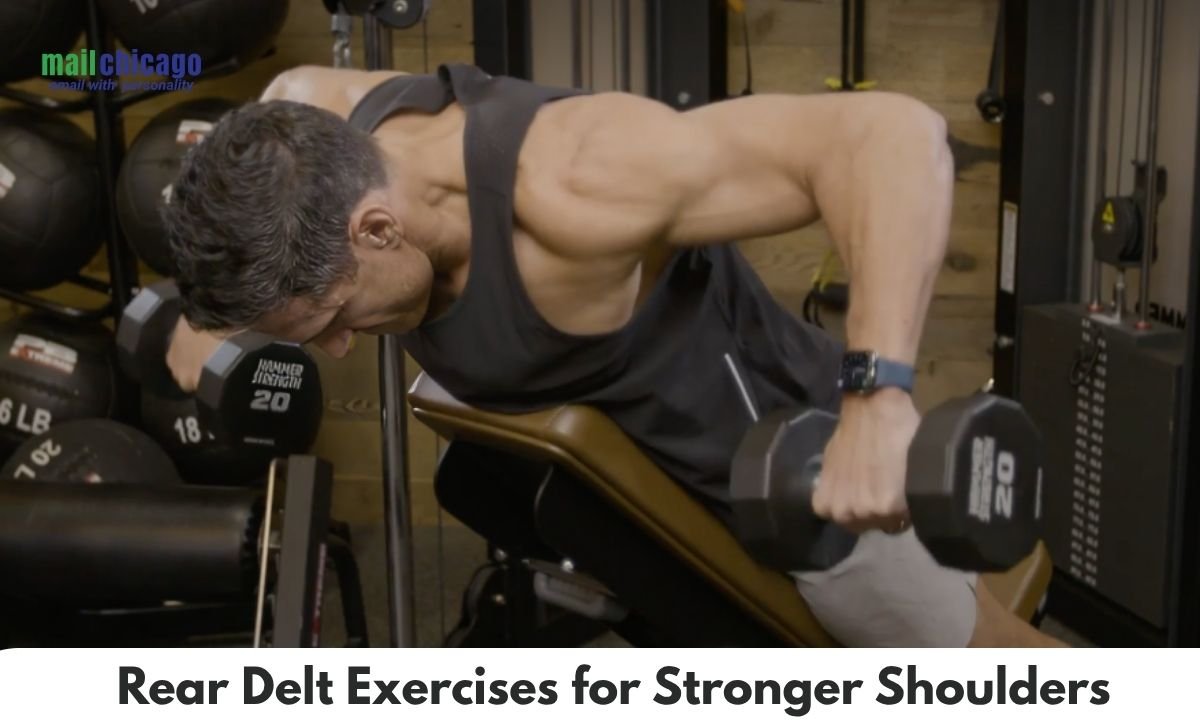
When most people think of shoulder training their focus tends to fall on the front and side deltoids. These are the muscles that create that broad-shouldered look and are often emphasized in pressing and lateral raise movements. Most people forget that the rear delts or the muscle at the back of your shoulder but it actually plays a big role in building strong balanced shoulders and keeping good posture. If you want a balanced physique and healthy shoulders then rear delt training should be an essential part of your workout routine. In this article, we will go over some of the best rear delt exercises and how to do them in the right way.
Know More About Rear Delt
The rear delt or rear deltoid is the small muscle located at the back of your shoulder. It’s one of the three main parts of your shoulder muscle along with the front and side delts. The front and side delts get used a lot in common pushing or lifting movements like shoulder presses or push-ups but the rear delts often get overlooked.
It plays an important role which will help you pull things toward you or move your arms backward and to maintain good posture by keeping your shoulders from rolling forward. Strengthening the rear delt not only improves the shape and balance of your shoulders but also helps protect you from injuries and back or neck pain over time.
Why Train the Rear Delt?
Better Posture
These days, we spend a lot of time sitting whether it is at a desk or staring at our phones or driving. This causes our shoulders to roll forward leading to poor posture. Strong rear delts help pull your shoulders back and support a tall, upright position reducing that hunched-over look.
Shoulder Balance and Injury Prevention
If you only train your front shoulders like in push-ups and bench presses then your shoulder muscles can become unbalanced. This imbalance puts stress on the joint and can lead to pain or injury. Training rear delts balances your shoulder strength to keep the joint stable and healthy.
Improved Strength in Pulling Movements
Your rear delts are heavily involved in pulling exercises like rows and pull-ups. Strengthening them improves your performance in these movements and helps you lift more with better form.
Better Shoulder Shape and Appearance
Rear delts complete the rounded look of your shoulders especially from the side or back. If you want a well-built upper body or a balanced athletic physique then rear delts are essential for that 3D shoulder effect.
Support for Other Muscle Groups
Strong rear delts also support your upper back and rotator cuff both of which are important for lifting, sports and daily activities. They team up with other muscles to help keep your shoulders steady during tough or tricky movements.
Best Rear Delt Exercises
1) Rear Delt Fly (Dumbbell or Machine)
The rear delt fly is an isolation exercise that directly targets the rear delts without heavy involvement from other muscle groups.
How to Do It?
- Start by sitting or standing then lean forward slightly from your hips.
- With a dumbbell in each hand also make sure your palms are facing inward toward one another.
- Keep a soft bend in your elbows and raise your arms sideways until they are in line with your shoulders.
- Lower them back down with control.
Tips:
Avoid using momentum or swinging. When your arms reach shoulder height then focus on pulling your shoulder blades in toward each other.
2) Face Pulls
Face pulls strengthen your rear delts and also help your rotator cuff muscles which are key for keeping your shoulders strong and pain-free.
How to Do It?
- Attach a rope to a cable pulley at about chest height.
- Grasp the rope with both hands and pull it towards your face leading with your elbows.
- Keep your upper arms parallel to the floor and squeeze your shoulder blades together.
Tips:
Use a light-to-moderate weight and focus on form over load. Avoid flaring the elbows too high.
3) Reverse Pec Deck Machine
This machine lets you perform the exercise smoothly so you can isolate and work your rear delts better.
How to Do It?
- Sit on the pec deck machine facing the pads.
- Grab the handles with your arms extended.
- Move the handles backward in a reverse fly motion until your arms reach shoulder height.
Tips:
Control the movement and avoid letting the weight slam back. Keep the motion smooth and deliberate.
4) Bent-Over Lateral Raises
This move hits both the rear delts and upper back which is perfect for getting stronger and more defined muscles.
How to Do It?
- Stand straight with your feet about shoulder-width apart and now bend at the hips and lower your chest until your back is almost flat like a table.
- Hold dumbbells with palms facing each other.
- Lift your arms out to the sides in a wide curve then slowly lower them back down.
Tips:
Keep the neck neutral and avoid looking up. Once your arms are up then give your rear delts a strong squeeze before lowering them.
5) Barbell or Dumbbell Rear Delt Rows
Barbell or dumbbell rear delt rows are pulling exercises where you bend over and row or pull the weight toward your upper chest or neck with your elbows flared out wide rather than tucked close to your body. This elbow position shifts the focus from your back to your rear shoulders.
How to Do It?
- Hold a barbell or dumbbells with a pronated or overhand grip.
- Bend at your hips and let your arms drop directly toward the floor.
- Pull the weight toward your upper chest or lower neck area.
- Let your elbows move outward as you lift to get the most activation in your rear delts.
Tips:
Don’t let your back go round. Pull with control and avoid using your traps or lower back to lift the weight.
Programming Rear Delt Workouts
Rear delts are a small muscle group so you don’t need to overload them with volume or heavy weights. However, frequency and good form are the key. For best results, train your rear delts two or three times a week on back day or shoulder day or on both days.
Sample Rear Delt Routine:
- Rear Delt Fly (3 sets of 12–15 reps)
- Face Pulls (3 sets of 10–12 reps)
- Reverse Pec Deck (3 sets of 12–15 reps)
You can also incorporate rear delt training into supersets with chest or lat exercises to save time while keeping the intensity high.
Conclusion
The rear delts may not be as visible in the mirror as the front or side delts but they are no less important. A well-developed set of rear delts enhances the appearance of the shoulders from all angles and plays a critical role in shoulder health, posture and performance. By incorporating targeted exercises like face pulls, reverse flyes and rows with proper technique, you will not only balance your physique but also protect yourself from injury in the long run.
Don’t neglect your rear delts because they are the hidden key to strong, healthy and aesthetically pleasing shoulders.
Also Read About –